


You’re sitting with a client who’s just said something technically incorrect about pensions. Do you correct them immediately, demonstrating your expertise and making sure they don’t continue to think the impossible is possible? Or do you let it go for now?
It seems like a small decision, but it’s exactly these moments where trust is built or broken in financial planning conversations.
Clients entrust not just their money, but their hopes, dreams, and futures to their financial planner. I often hear people say what a huge privilege this is. When the stakes are high and the subject matter deeply personal, trust becomes the currency that underpins every interaction. Yet trust is not automatic, it’s a dynamic foundation of relationships, built in small moments and easily eroded.
The good news? Building trust isn’t about changing who you are, and it’s something that can be learned and developed as a skill.
It’s about developing a practice that ignites client thinking and enables deeper discovery. This blog explores how trust is built and lost, drawing on some fundamental models that I find really useful.
Along the way, you’ll find practical strategies to help you, as a financial planner, strengthen trust with your clients.
Why trust matters in financial planning
Trust matters because without it, you’ll never get to the conversation you actually need to have. Clients will stay on the surface, discussing portfolio allocations and arbitrary retirement ages or income needs. When what’s really important to them is their fear about retirement or anxiety about providing for their children or the messages that they carry about money from childhood that are holding them back.
The technically correct advice becomes irrelevant if you haven’t built enough trust to uncover what truly matters.
This isn’t just intuition (although most Planners do know this intuitively!) – it’s backed by research. According to YouGov Financial Services research, 60% of those surveyed said trustworthiness is the most important factor when choosing a financial adviser, placing it well ahead of cost, qualifications and historical performance. Trust isn’t one priority among many; it’s the foundation that everything else is built on.
It’s borne out by client surveys too – I’ve not yet come across a firm whose clients haven’t cited trust as one of the things they value most highly in their relationship with their Financial Planner.
Trust is especially fragile in financial planning too, because the subject matter is complex, and clients often feel vulnerable. This makes the way you communicate and interact critical to building and maintaining trust.
Trust is built in small moments: The wisdom of the marble jar
Brené Brown’s marble jar analogy offers a simple yet profound way to understand trust.

Imagine a jar filled with marbles. Each time someone demonstrates trustworthiness – through small acts of kindness, reliability, or care – a marble is added. When trust is broken, marbles are removed. When we get it really wrong, the jar is smashed and marbles roll everywhere.
Ever experienced that moment with a client where things have just gone horribly wrong? A tension that has appeared after you spoke? A shift in atmosphere that you’ve not been able to recover? Perhaps your words or actions just removed a handful of marbles from the trust jar.
In financial planning, these “small moments” can make or break a relationship and the more marbles you can add early on, the better.
Consider this story a planner shared with me. They’d corrected a client early in a meeting. The client had misunderstood a technical point (believing they could buy residential property within their pension). Although the planner chose his words carefully, the correction caused the client to “cool off” considerably. In fact, his reflection was that the whole meeting went badly from that point forward.
The self-awareness that this planner demonstrated to notice the point at which the meeting shifted is, in itself, to be appreciated. It gave us the opportunity to think about it together after the meeting. We reached the conclusion that despite the care with which he delivered the message, his attempt to “make sure she wasn’t working from an incorrect assumption” inadvertently removed marbles from the trust jar. The correction, while accurate, wasn’t essential at that moment. The client probably felt dismissed or judged, leading to a breakdown in trust.
The care with which the message is delivered is not what matters to the relationship. What matters is how this message landed with the client and made her feel.
Practical tip:
Focus on making your client feel safe, creating an environment of non-judgement, and focusing on them as a person, their goals, hopes, fears and aspirations. When you’re tempted to correct something they have said:Ask yourself: “Is this fact essential right now, or can it wait?”
Building trust often means prioritising the relationship over the need to prove competence.
The four quadrants of trust: Charles Feltman’s model
In his book The Thin Book of Trust, Charles Feltman discusses four quadrants of trust which provide a structured way to think about trust-building. I’ve found this model really useful.
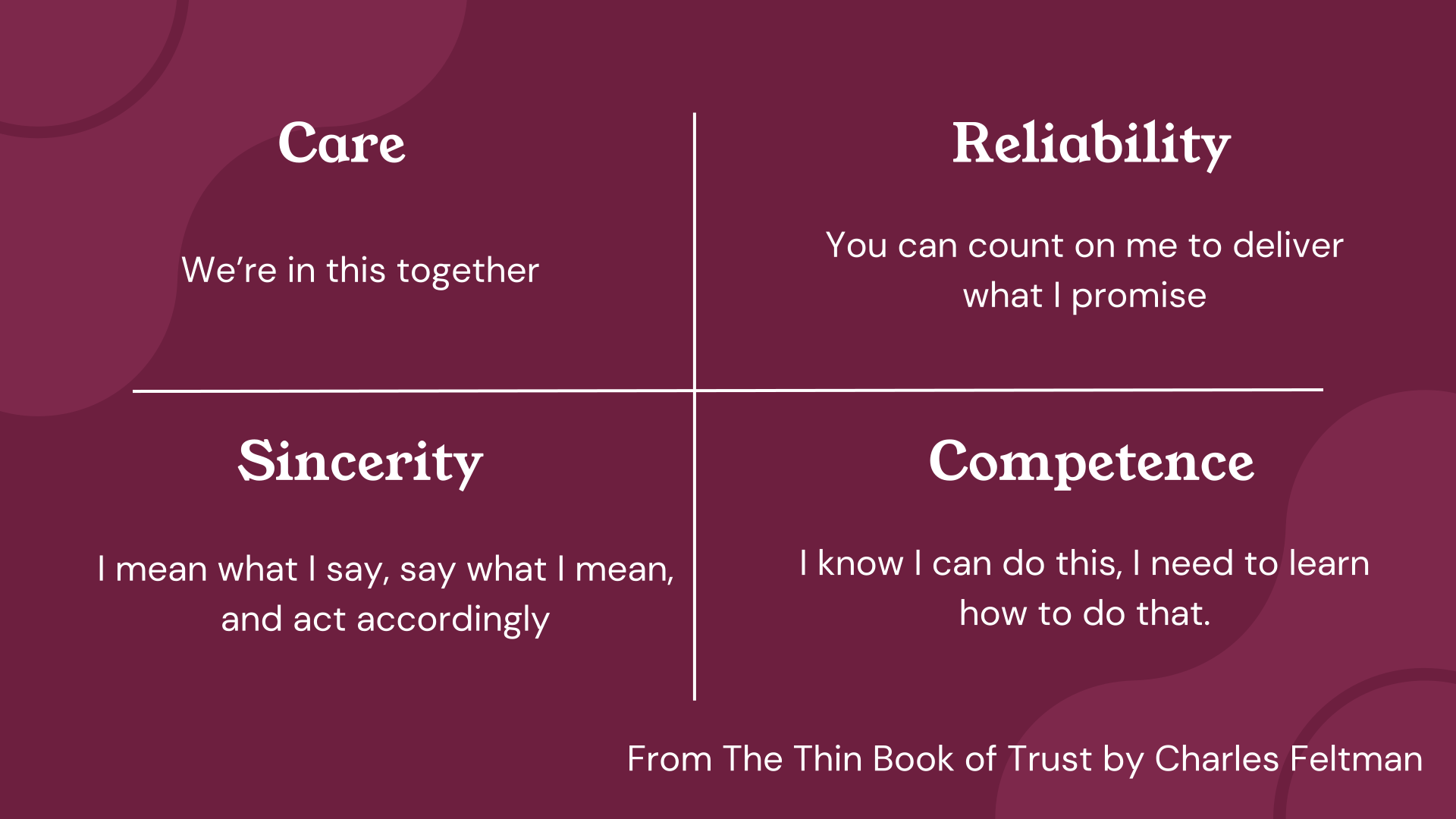
All four quadrants are essential, but I have noticed that financial planners often overplay competence, and this can erode trust in the other quadrants.
In the earlier example, the planner’s focus on correcting the client demonstrated competence, but it inadvertently damaged care. The client may have felt unheard or undervalued. Or even felt stupid in that moment (which to many of us is an embarrassment or even shame invoking trigger).
Research from the CFP Board confirms this pattern. Their study using structural equation modelling found that:
Technical skills alone – such as generating high investment returns – are not sufficient to build client trust and commitment. Instead, trust is built through communication abilities, an absence of opportunistic behaviour, and shared values.
NB – I will return to the idea of opportunistic behaviour later, but for now, suffice to say that this could look like over-explaining how great your investment proposition is, or perhaps going deep into your technical knowledge because your client happened to say the word “pension”!
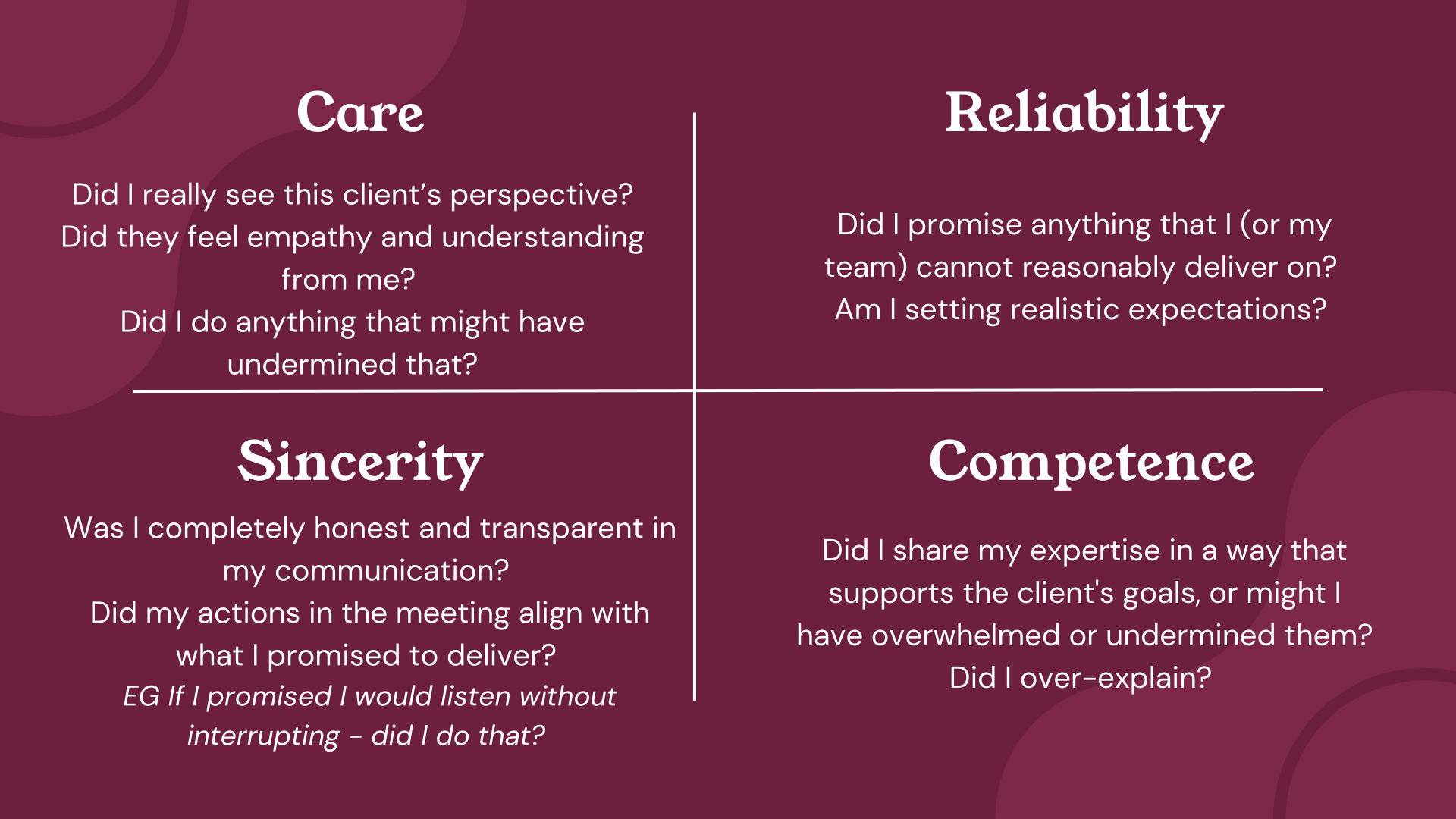
Practical tip:
The next time a meeting doesn’t quite go as you hoped, take some time to consider how well you balanced the four quadrants of trust. Try asking yourself:
The Thinking Environment: information and encouragement
Nancy Kline’s Thinking Environment framework offers further insights into trust building. She describes one clear thinking inhibitor (and trust damager) as competition – or even perceived competition.
The antidote? Encouragement. Giving courage to go to the cutting edge of thinking by ceasing competition.
This involves creating a space where clients feel supported to think deeply and explore their ideas without any judgement or competition. When you create the space for clients to think independently – even when their thinking seems technically off-track – you’re sending a clear message. “I trust in your capacity to think this through for yourself, and I respect your views”. This space is where the real conversations happen, the ones that lead to meaningful change rather than just technical adjustments to financial products and investment funds. .
Sometimes, planners feel the need to prove their worth, which can unintentionally create a sense of competition with a client. Perhaps your need to know, or have the best answer, solve or advise takes over. But to a client with whom you are trying to build a relationship, this can feel quite threatening.
Practical tip:
Shift your mindset from “proving” to “partnering.” Encourage clients to share their thoughts and ideas, even if they’re technically incorrect. This demonstrates care and sincerity, strengthening trust.
Avoiding opportunism: a trust detractor
One of the major detractors of trust is perceived opportunism (SOURCE). Clients may feel that their planner is more focused on selling services or showcasing expertise than genuinely understanding their needs.
Most Planners I know would vehemently deny that they ever demonstrate opportunistic behaviour, but I wonder if this is an unintended consequence of interactions.
For example, if a client mentions Bitcoin and the planner immediately dives into technical details, or an explanation of why they do (or don’t) agree with crypto as a good investment choice, it could be perceived as opportunistic. While the planner may simply be trying to share their reasoned and well informed views, the client could feel that their broader goals are being overlooked or their own views or preparation for the meeting, are being sidelined or questioned.
Practical tip:
Resist the urge to jump into explanation mode. Instead, ask open-ended questions to understand the client’s goals and priorities. This approach demonstrates care and sincerity, while also allowing you to tailor your expertise to their needs.
Conclusion: trust is a practice, not just a skill
Building trust as a financial planner requires a delicate balance of care, reliability, sincerity, and competence. Trust is built in small moments (looking up grandchildren’s names before a meeting, remembering to check in after a special holiday, even sharing your why – what makes you so passionate about helping your clients?) and can be damaged just as easily. By focusing on the client’s needs, prioritising essential information, and creating a supportive environment where independent thinking can flourish, you can strengthen trust and foster lasting relationships built on great foundations..
Trust is not just a skill; it’s a practice. By continually reflecting on how you build and maintain trust, you can elevate your client relationships and your professional success.
What do you think? How do you build trust with your clients? How might you inadvertently damage it? I’d love to hear from you.
If you’d like to develop these trust-building practices more systematically in your client conversations, that’s exactly what our Unlocking Excellence programmes are designed to do. You can find more information here, or get in touch and let’s talk.
Learn more:
- Brené Brown’s marble jar analogy on Diary of a CEO
- Charles Feltman’s Thin Book of Trust
- Nancy Kline’s Time to Think
- YouGov Financial Services CategoryView research on trust in financial advice
- CFP Board: “The Science of Building Trust and Commitment in Financial Planning”
- RAND Corporation working paper on financial trust and advice usage
- CFA Institute Investor Trust Study




0 Comments